Timber Frame
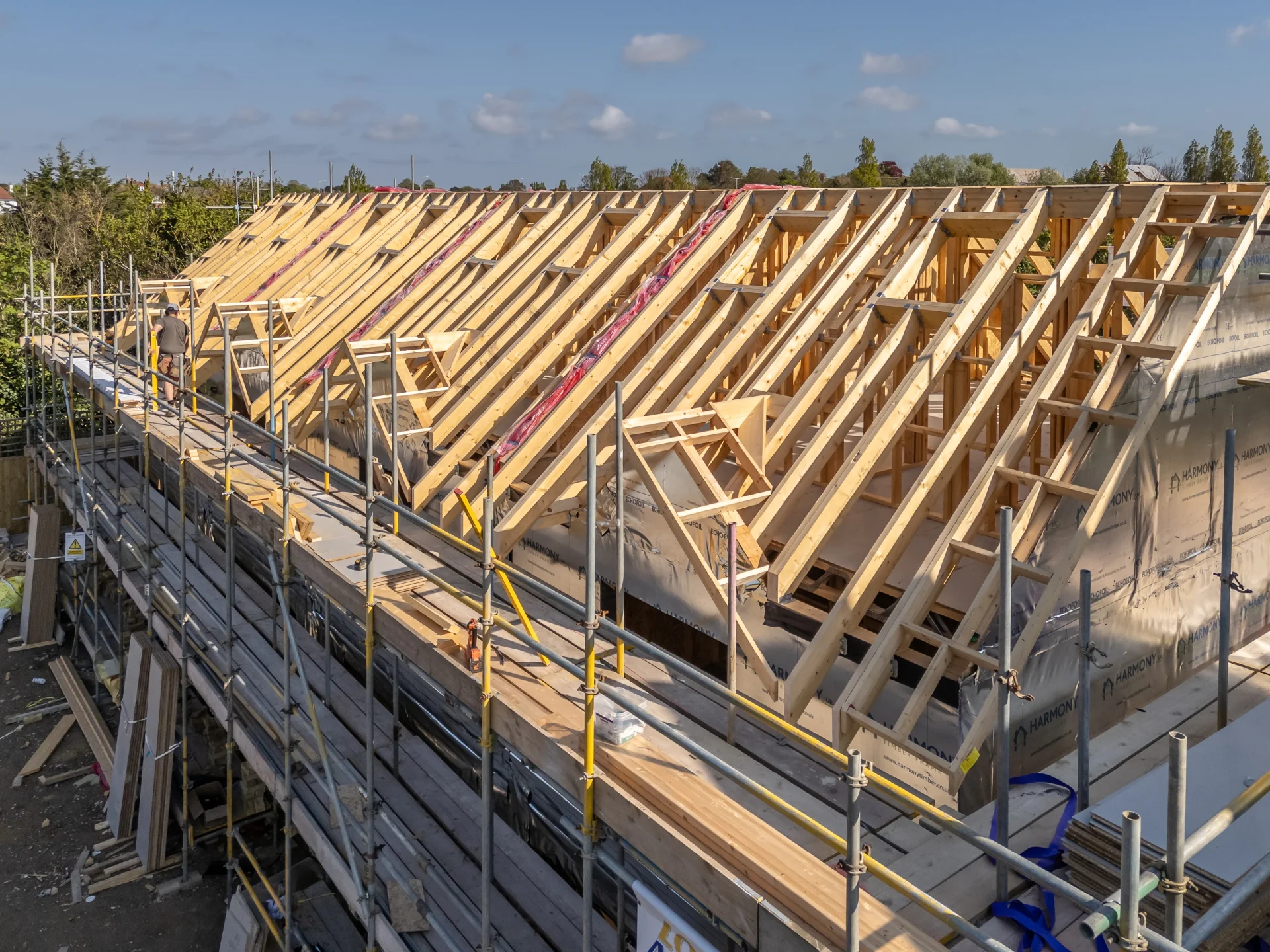
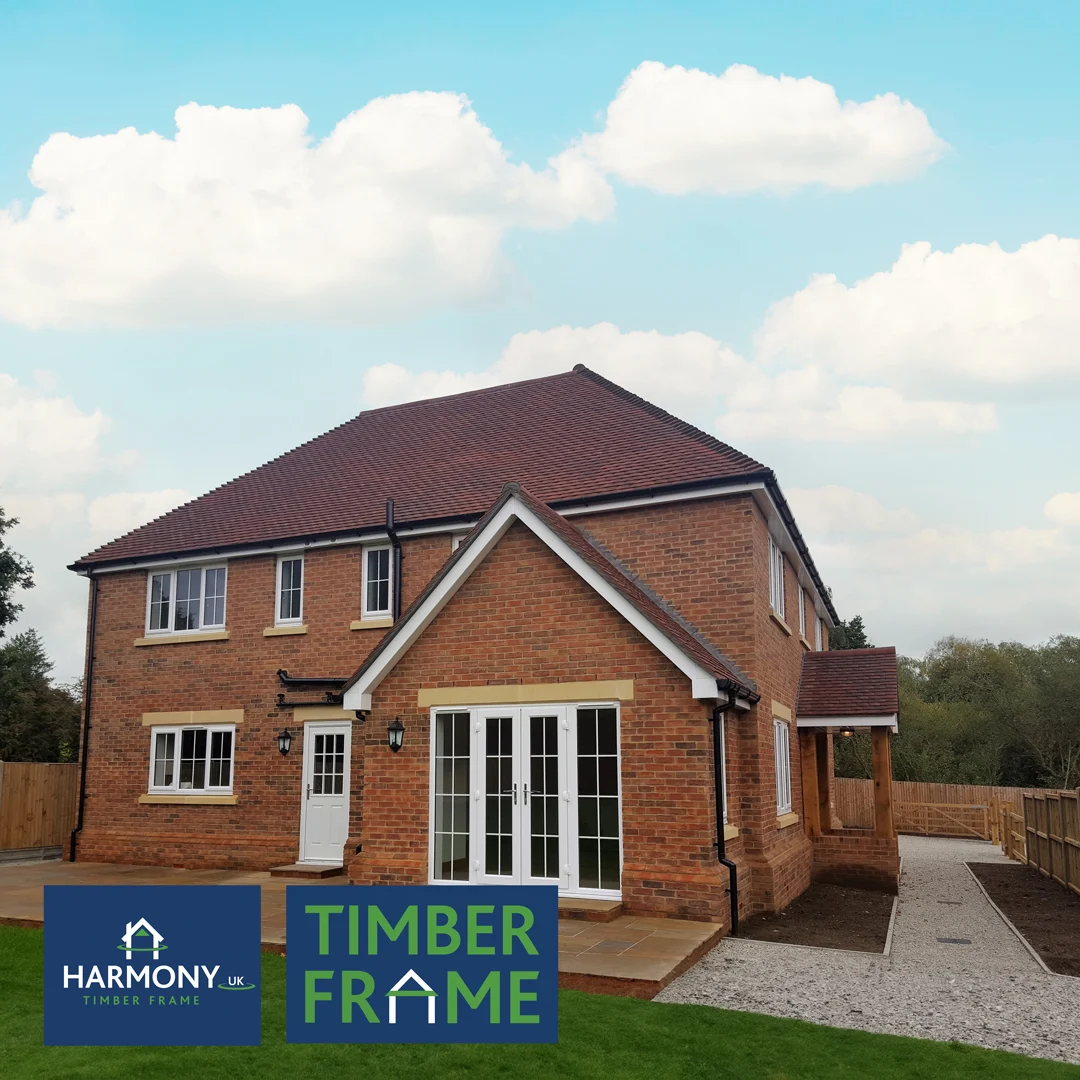
For self-builders choosing a Timber Frame home, we manufacture high-quality Timber Frame panels in our controlled factory environment.
Timber frame construction offers many advantages including:
- Faster build programmes
- Excellent thermal performance
- High levels of airtightness
- Reduced site waste
- Sustainable construction using renewable materials
Timber Frame Panel Options
Harmony Timber Frame systems can be supplied as open panel or closed panel construction, depending on the level of prefabrication required for your project.
Open Panel Timber Frame
Open panel systems consist of structural timber studs sheathed with OSB and protected with a breathable membrane. Insulation and internal finishes are installed once the frame has been erected on site.
Benefits include:
- Greater flexibility during the build
- Suitable for a wide range of projects
- Cost-effective solution for many self-build homes
Closed Panel Timber Frame
Closed panel systems are manufactured in our factory under controlled conditions. Insulation, vapour barriers and service battens are installed before the panels are delivered to site.
Benefits include:
- Faster installation on site
- Improved quality control
- Enhanced thermal performance, with low U-values down to Passiv-Haus levels, typically 0.15 W/m2K
- Reduced on-site labour
Designed for Energy Performance
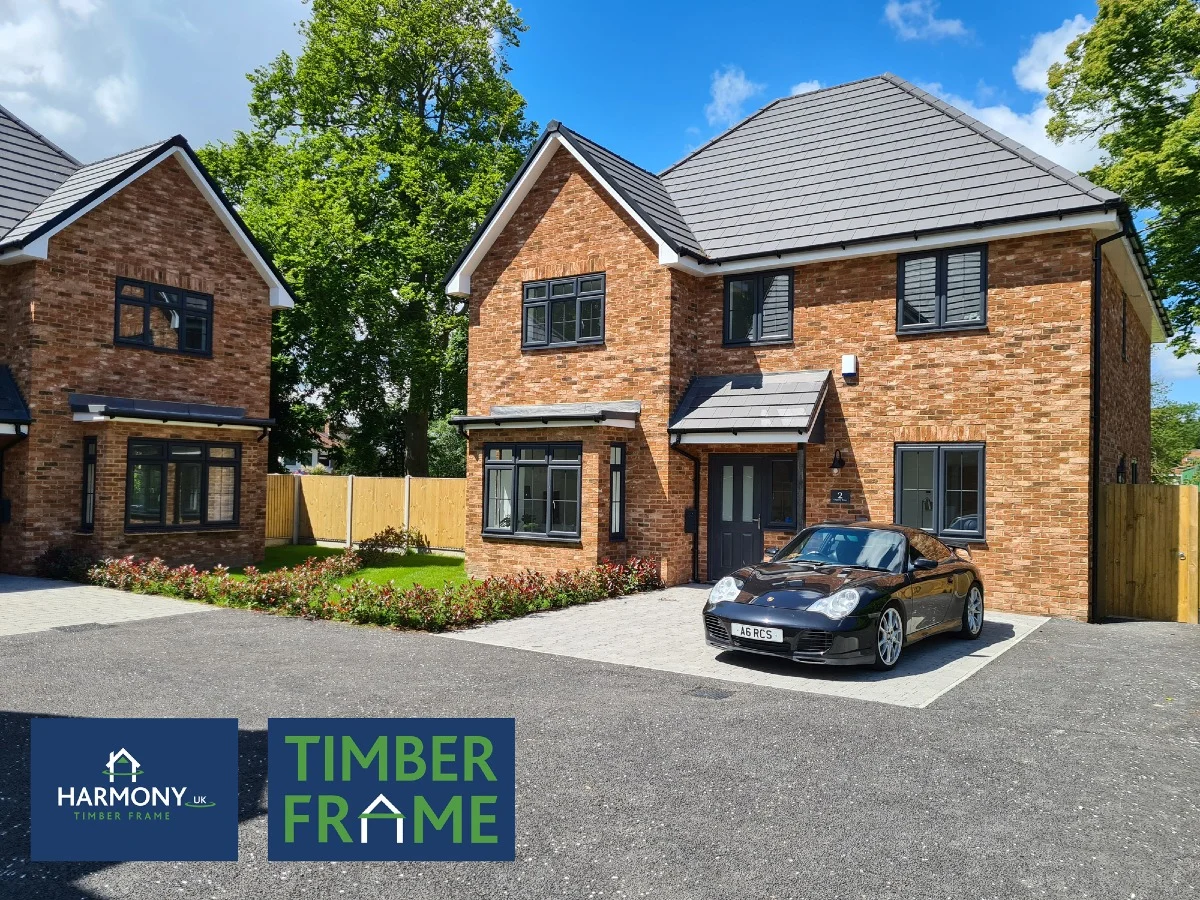
Our Timber Frame systems are designed and engineered to achieve excellent thermal performance and airtightness.
Each wall build-up is carefully designed to deliver low U-values, helping to reduce heat loss and improve the overall efficiency of your home.
Airtight construction is achieved through continuous sealing systems that minimise unwanted air leakage. This results in:
- Lower heating costs
- Improved ventilation system performance
- Reduced draughts
- More comfortable internal environments